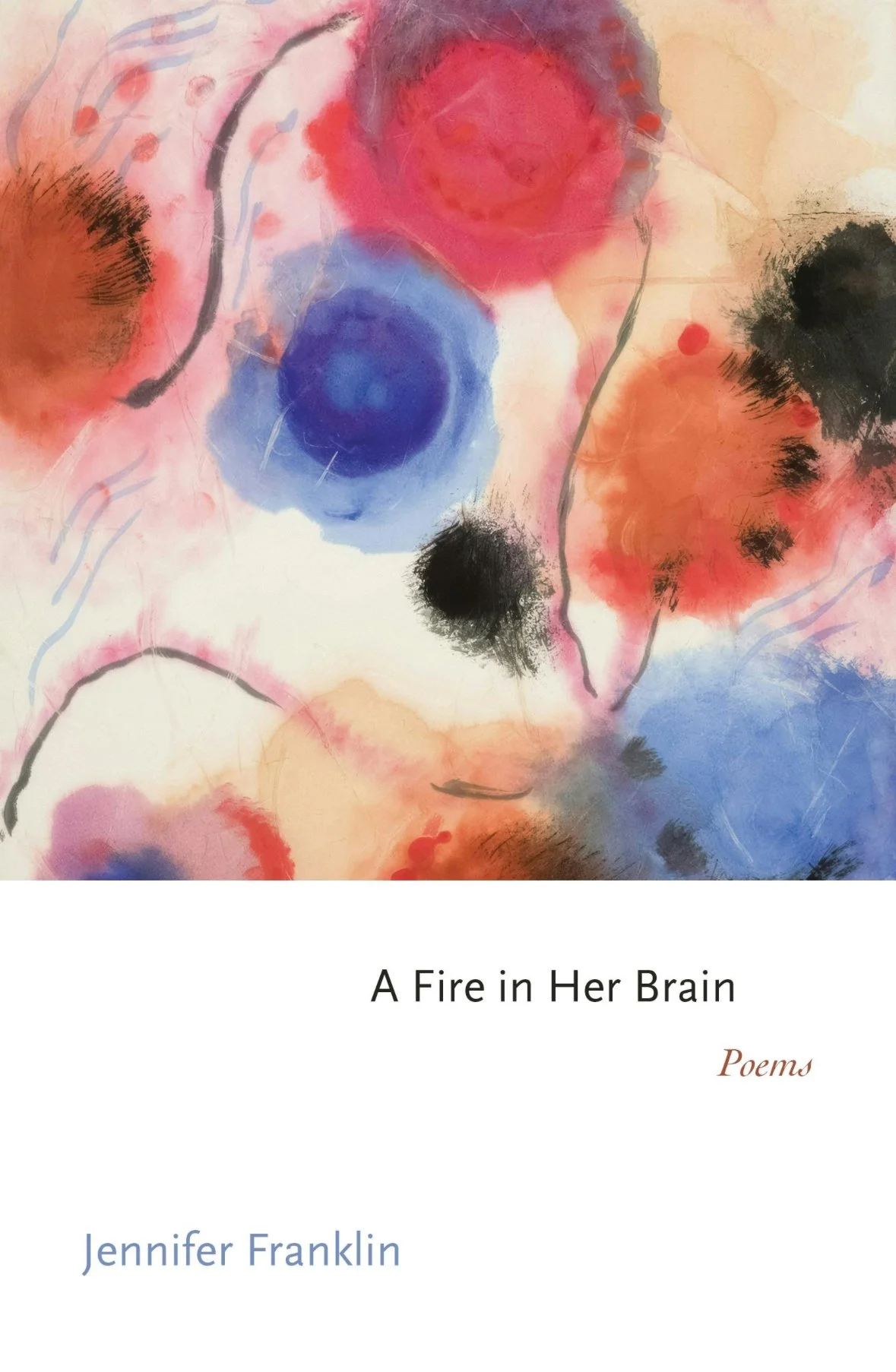
A Fire in Her Brain: Poems
A profound and moving sequence of poems exploring genius and mental illness through the lives of Lucia Joyce, Virginia Woolf, and Sylvia Plath
Pre-order from Bookshop
Hardcover/Paperback
$17.95/£14.99/ ISBN: 9780691293868/ Published: Jan 12, 2027
Awards and Recognition
A Literary Hub Most Anticipated Poetry of This Year
Featured in Publishers Weekly Fall Poetry Preview
Featured in Assoicated Press’s Fall Poetry Preview
Praise
“Using epistle and ventriloquism, samples and appropriation, Franklin channels her muses to find ways to survive. Each muse could be called tragic, yet these poems give meaning to their lives, and by extension to ours. This is a project of reclamation, and the results are stunning.”—Nick Flynn, author of Low: Poems and The New York Times bestselling memoir Another Bullshit Night in Suck City
“Franklin writes at white heat. In this superb new book, she bears witness to artists pushed to the brink and the poet’s own struggle for presence in a world ruled by violence. She enacts the staggering cost women pay to live lives that don’t fit any mold. Every word counts in the teeth of erasure. There’s an intimate flame burning in Franklin too: a visceral commitment to human vulnerability. In these straits, whether or not there’s hope, there’s wonder. Passionate, rigorous, avid for a truth we don’t yet know, A Fire in Her Brain will change you.”—D. Nurkse, author of A Country of Strangers: New and Selected Poems
About the Book
A Fire in Her Brain examines the porous boundary between the spark of genius and a mind in conflagration in the lives and works of Lucia Joyce, Virginia Woolf, and Sylvia Plath, women whose imaginative gifts were also a Cassandrian curse. Penetrating, meticulous, and tender, Jennifer Franklin’s poems capture her subjects’ brimming intellects, ardent keenings, and resilient but ultimately corruptible minds and bodies in elegies (chiefly in epistolary mode) for genius departed or abandoned too soon. Interwoven through the collection are lyrical meditations on Franklin’s own artistic struggles, her battles with life-threatening disease and invisible disabilities, and the difficulties of caring for her disabled daughter. What emerges is a powerful and affecting reflection on the pain and pleasure of devoting a life to making art, the agony of being thwarted in that pursuit, and the sustaining hope that art can provide, especially during times of personal and political upheaval.